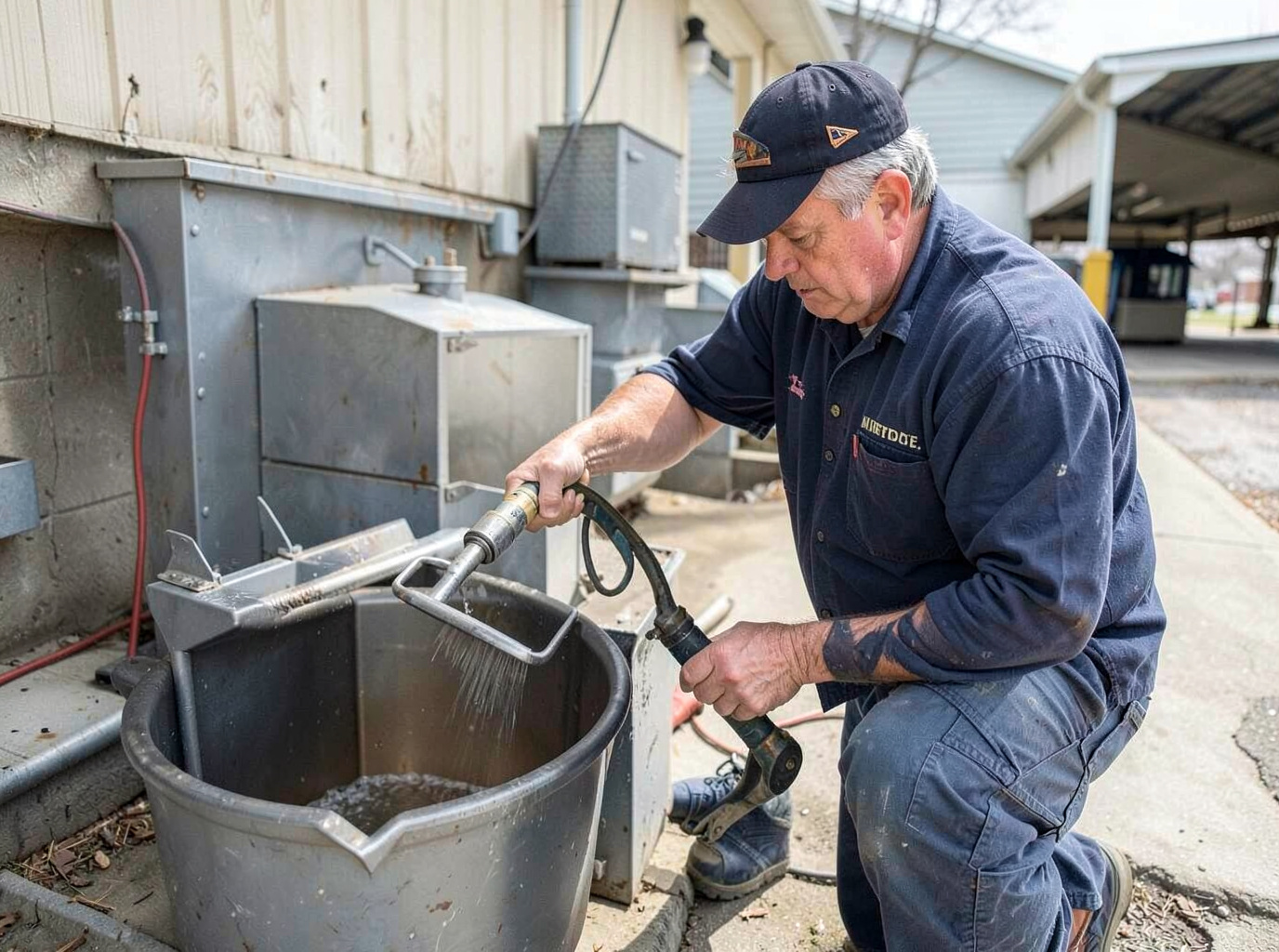
Murfreesboro restaurants near Middle Tennessee State University and along The Avenue see heavy grease loads from daily frying and dishwashing. In humid subtropical summers the warmer wastewater keeps fats liquid longer, allowing them to travel farther into lines before solidifying. Older commercial buildings downtown often have smaller 50- to 100-gallon traps installed decades ago that fill faster than modern units and require more frequent pumping to stay within Rutherford County health codes.
Residential grease traps in Blackman and Barfield neighborhoods are usually tied to older septic systems or municipal laterals that were not sized for today's high-fat cooking. Mild winters keep soil temperatures higher, so grease does not congeal as quickly underground and can create slow backups that homeowners mistake for simple clogs. Technicians must account for tree-root intrusion common along Stones River corridors when accessing outdoor traps in these subdivisions.
Technicians at 869 Dashiel St schedule around lunch rushes for eateries near campus and avoid peak traffic on I-24 when heading to Smyrna jobs. Proper cleaning includes scraping walls, checking the outlet tee for damage, and verifying flow before leaving so the trap meets local inspection standards without unnecessary water use.
Technician insight
In Murfreesboro the thing that catches most people out with Grease Trap Cleaning is the shallow clay soil in older Downtown neighborhoods that lets roots reach the outlet pipe right after the trap; once roots get past the baffle they create backups that look like a full trap but actually need jetting first.
Lunch-rush backup at a campus-area restaurant
A kitchen on the edge of Middle Tennessee State University called after slow drains during the noon rush. The 75-gallon trap was only half full but the outlet line held a thick grease plug that had traveled into the older clay lateral. We pumped the trap, jetted the line to the cleanout at the alley, and restored full flow before the dinner shift.
Grease Trap Cleaning Services We Offer
✓Commercial Grease Trap Pumping
Scheduled pumping and solids removal for restaurants near MTSU and The Avenue to prevent health-code violations during busy seasons.
✓Residential Grease Trap Maintenance
Quarterly cleaning for homes in Blackman and Barfield where older lines and septic connections trap cooking fats before they reach main sewers.
✓Kitchen Drain Line Jetting
High-pressure clearing of grease buildup between the trap and street lateral, common in downtown Murfreesboro buildings with aging cast-iron pipes.
✓Trap Inspection and Repair
Camera inspection and minor repairs on damaged baffles or lids for traps serving commercial kitchens in Rutherford County.
✓Emergency Grease Trap Service
Same-day response for backups affecting businesses along Memorial Boulevard or near Stones River National Battlefield during peak summer heat.
Grease Trap Cleaning Cost in TN
| Service | Typical Range | What Affects It |
|---|---|---|
| Standard commercial trap pump-out | $250–$450 | 50- to 100-gallon units common near MTSU; price rises with solids volume |
| Residential trap service | $175–$325 | Smaller outdoor units in Blackman and Barfield subdivisions |
| Jetting after trap cleaning | $150–$300 | Added when lines between trap and street are restricted |
| Emergency or after-hours call | $100–$200 | Added fee for Saturday or same-day response outside normal hours |
Ranges are typical for TN and confirmed with an exact written quote before any work starts.
How it works
- 1
Site Assessment
Technician locates the trap, checks access lids, and measures current grease and solids levels in Murfreesboro kitchens.
- 2
Pumping And Removal
Contents are vacuumed into the service truck while solids and grease layers are separated for proper disposal.
- 3
Interior Cleaning
Walls, baffles, and outlet tees are scraped and rinsed to restore full flow capacity.
- 4
Final Flow Test
Water is run through the trap to confirm proper function before the lid is secured and the area is left clean.
Pricing
Most Murfreesboro jobs fall into published ranges; final price depends on trap size, access difficulty, and disposal volume.